
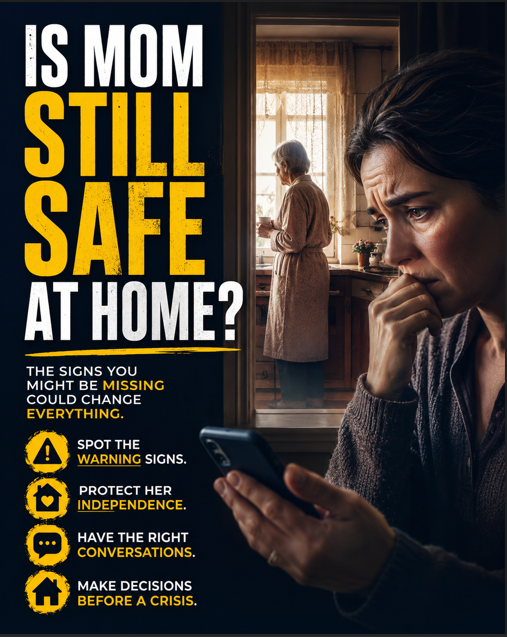
Don’t wait for a crisis to discover that Mom needed help.
Is Mom Still Safe at Home?
The 10-Minute Family Safety Check
You don't have to wait for a fall, medication mistake, or emergency to start paying attention.
The next time you visit Mom or Dad, spend 10 quiet minutes noticing what everyday life looks like.
You're not trying to catch them doing something wrong or take away their independence. You're simply looking for changes that may suggest they need a little more support.
A Note Before You Begin
This checklist is an educational tool designed to help families notice possible changes and start conversations. It is not a medical, cognitive, legal, financial, or professional safety assessment.
1. Medications
-
Are medications organized and being taken as intended?
-
Are there missed doses, duplicate pills, empty bottles, or confusion about what each medication is for?
-
Has managing prescriptions become noticeably harder?
Why it matters: Medication mistakes can be an early sign that daily routines are becoming difficult to manage safely.
2. Food and Nutrition
-
Is there fresh food in the refrigerator?
-
Are meals being prepared regularly?
-
Are there spoiled foods, mostly empty shelves, or signs that meals are being skipped?
-
Have you noticed unexpected weight loss?
Why it matters: Difficulty shopping, cooking, remembering meals, or maintaining nutrition can signal a need for additional support.
3. Falls and Mobility
-
Is Mom moving around the home confidently?
-
Is she holding onto furniture or walls for balance?
-
Are there new bruises or unexplained injuries?
-
Has she mentioned falling, stumbling, or "almost falling"?
Why it matters: A small change in balance or mobility can become a serious safety issue if nobody notices it early.
4. The Condition of the Home
-
Does the home look generally the way it normally does?
-
Are dishes, laundry, trash, or clutter beginning to pile up?
-
Are there tripping hazards, loose rugs, poor lighting, or blocked walkways?
Why it matters: Changes in housekeeping may reflect physical limitations, fatigue, memory problems, or difficulty keeping up with everyday tasks.
5. Bills, Mail, and Money
-
Is unopened mail accumulating?
-
Are bills being paid on time?
-
Are there duplicate payments, overdue notices, or unusual purchases?
-
Has Mom become confused about familiar financial matters?
Why it matters: Managing money requires organization and judgment. Sudden changes deserve attention.
6. Memory and Thinking
-
Is Mom repeating the same questions or stories more than usual?
-
Does she seem confused about appointments, dates, familiar places, or routine tasks?
-
Is she forgetting things that previously would have been unusual for her to forget?
Why it matters: Occasional forgetfulness can happen with aging, but noticeable changes in everyday functioning should not be ignored.
7. Driving
-
Is the car showing new dents, scratches, or damage?
-
Has Mom become nervous driving familiar routes?
-
Is she getting lost, missing turns, or avoiding certain driving situations?
-
Have passengers expressed concern?
Why it matters: Driving can reveal changes in vision, reaction time, judgment, attention, or confidence.
8. Personal Care
-
Is Mom bathing, dressing, and grooming herself as usual?
-
Are clothes clean and appropriate?
-
Has there been a noticeable decline in personal hygiene?
Why it matters: Changes in personal care can indicate physical difficulty, mood changes, memory problems, or reduced ability to manage daily life.
9. Social Connection and Mood
-
Is Mom still talking with friends, family, neighbors, or community groups?
-
Has she stopped doing activities she previously enjoyed?
-
Does she seem unusually lonely, withdrawn, anxious, or discouraged?
Why it matters: Isolation can affect well-being and the ability of others to notice when something is wrong.
10. Emergency Readiness
-
Could Mom easily call for help if she fell?
-
Does she keep a phone within reach?
-
Does someone have a key or another safe way to enter the home?
-
Does the family know who should be contacted in an emergency?
Why it matters: Even someone who is managing well today should have a plan for what happens if something suddenly changes.
What Did You Notice?
Mostly Everything Looks Normal
That's reassuring. Keep talking, visiting, and paying attention to changes over time.
You Noticed Several Changes
It may be time for a calm conversation about whether Mom could benefit from additional help at home, transportation assistance, meal support, medication help, or other services.
You Found Several Serious Concerns
Don't assume that moving to senior living is automatically the answer.
The next step is to understand what is changing, involve Mom in the conversation, and consider appropriate professional guidance before making major decisions.
One Question to Ask Yourself
“Am I seeing one isolated problem—or a pattern that is making everyday life harder or less safe?”
That distinction can help families make thoughtful decisions before a crisis makes the decision for them.
Senior Living Answers with Fred Van Ryn

Helping families navigate the questions that come before, during, and after the senior-living decision.
A Note Before You Begin
This resource is provided for general educational and informational purposes only. It is intended to help families notice changes and identify questions they may want to explore.
It is not a medical, cognitive, legal, financial, or professional safety assessment and should not be used to diagnose a condition or determine whether someone can safely live independently.
If you have concerns about an older adult's health, memory, medications, mobility, driving, personal safety, or ability to live independently, consult an appropriate qualified professional. If there is an immediate safety or medical emergency, contact emergency services.
Senior Living Answers with Fred Van Ryn does not provide medical, legal, or financial advice.
© 2026 Fred Van Ryn, LLC. All rights reserved.