
Introduction to Atmospheric Water Generators
The world is facing an increasing water crisis. With the population growing at a rapid pace and climate change impacting natural water resources, finding innovative solutions for accessing clean and safe drinking water is becoming a necessity. One such solution is the Atmospheric Water Generator (AWG), a revolutionary technology that extracts moisture from the air and converts it into potable water.
How does an Atmospheric Water Generator work?
 An Atmospheric Water Generator works by utilizing the basic principles of condensation and dehumidification. It first draws in air from the surrounding environment through a built-in air filter.
The filtered air then passes over a refrigerated coil, where the temperature is lowered to the dew point, causing the moisture in the air to condense. This condensed water is collected and undergoes a purification process to remove any impurities, resulting in clean and safe drinking water.
AWGs operate using either a compressor-based system or a desiccant-based system. Compressor-based AWGs are known for their efficiency and high water production capacity, making them suitable for residential and commercial use. On the other hand, desiccant-based AWGs are often used in low humidity environments as they are capable of extracting water even from extremely dry air.
Advantages of Atmospheric Water Generators
1. Independence from water sources: AWGs provide a reliable and sustainable source of water, independent of traditional water sources such as rivers, lakes, or wells. This means that even in regions where there is a scarcity of water, AWGs can provide a consistent supply of clean drinking water.
2. Environmentally friendly: Unlike traditional water sources, AWGs do not deplete water tables or contribute to water pollution. They also reduce the need for transportation and plastic bottles, helping to minimize the carbon footprint associated with the production and delivery of bottled water.
(For example, this relatively new-to-the-market model, the compact Airiver Atmospheric Water Generator uses only 250W per day! Total game-changer!)
3. Energy-efficient: While the energy consumption of AWGs varies depending on the model and capacity, technological advancements have led to the development of energy-efficient units. Some AWGs utilize renewable energy sources such as solar or wind power, making them even more sustainable.
4. Disaster relief and emergency situations: AWGs play a crucial role in disaster-stricken areas where access to clean drinking water can be severely limited. They can quickly provide a reliable source of water without the need for complex infrastructure or transportation logistics.
Applications of Atmospheric Water Generators
1. Residential use: AWGs are increasingly being used in homes to provide a supplemental source of drinking water. They can be particularly useful in areas where water quality is poor or during periods of drought. Read more about how you can build your own AWG here, and the types of materials you may need, here.
2. Commercial use: Many businesses, particularly those in the hospitality industry, have started incorporating AWGs to provide their customers with high-quality drinking water while reducing their environmental impact.
3. Military and humanitarian operations: AWGs are widely used in military and humanitarian operations, ensuring access to safe drinking water for troops deployed in remote areas or communities affected by natural disasters.
4. Agriculture: AWGs can also be used for agricultural purposes, providing water for irrigation in regions where water scarcity poses a challenge to food production.
Buying a Small Atmospheric Water Generator
One thing we are noticing is a trend towards people wanting to buy a SMALL AWG, especially folks in tiny houses, "glamping," van life, and also off-grid folks who want to be sure that they have an option for supplying their homes with water at the flip of a switch. Although these models are not "cheap" (at least not yet), they are tiny AND mighty. Check out this one called "Airiver" that only recently began marketing their 10 Liter AWG (I believe they launched it in May 2023). They call it the "Worlds Smallest 10L Family Atmospheric Water Generator." They claim it won a 2023 design award. One of the selling points is its portability. Just wanted to mention it!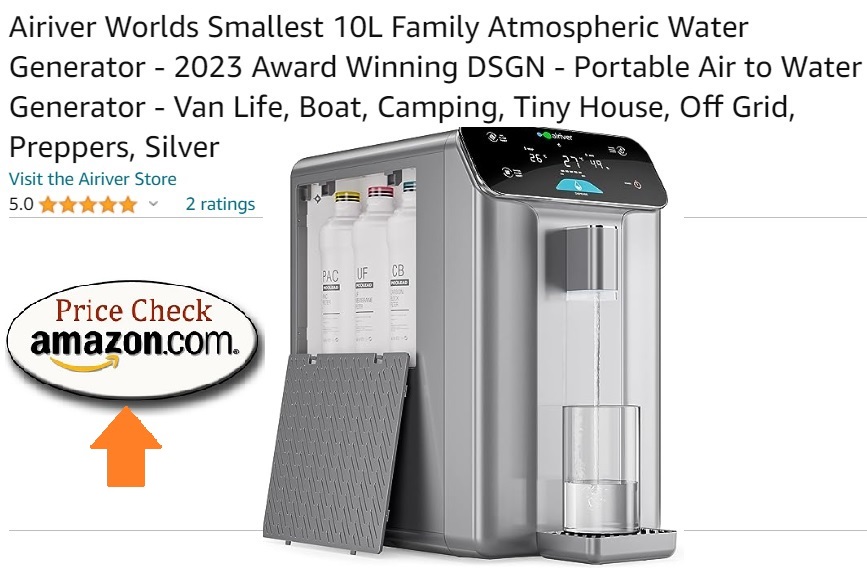
Conclusion
As the global water crisis intensifies, innovative solutions like Atmospheric Water Generators offer hope for a sustainable future. The ability to generate clean drinking water from the air has tremendous potential to address water scarcity, mitigate environmental impact, and improve the quality of life for millions of people worldwide.
*We may earn a small commission from purchases made through our links. Thank you for supporting independent businesses like ours!